
How to Look After a Newly Landscaped Garden
The day we pack up is not the day the garden is finished. Turf takes four to six weeks to root in, plants take a season to settle, mulch sinks, and the irrigation settings we leave you with are a starting point until the weather has had its say.
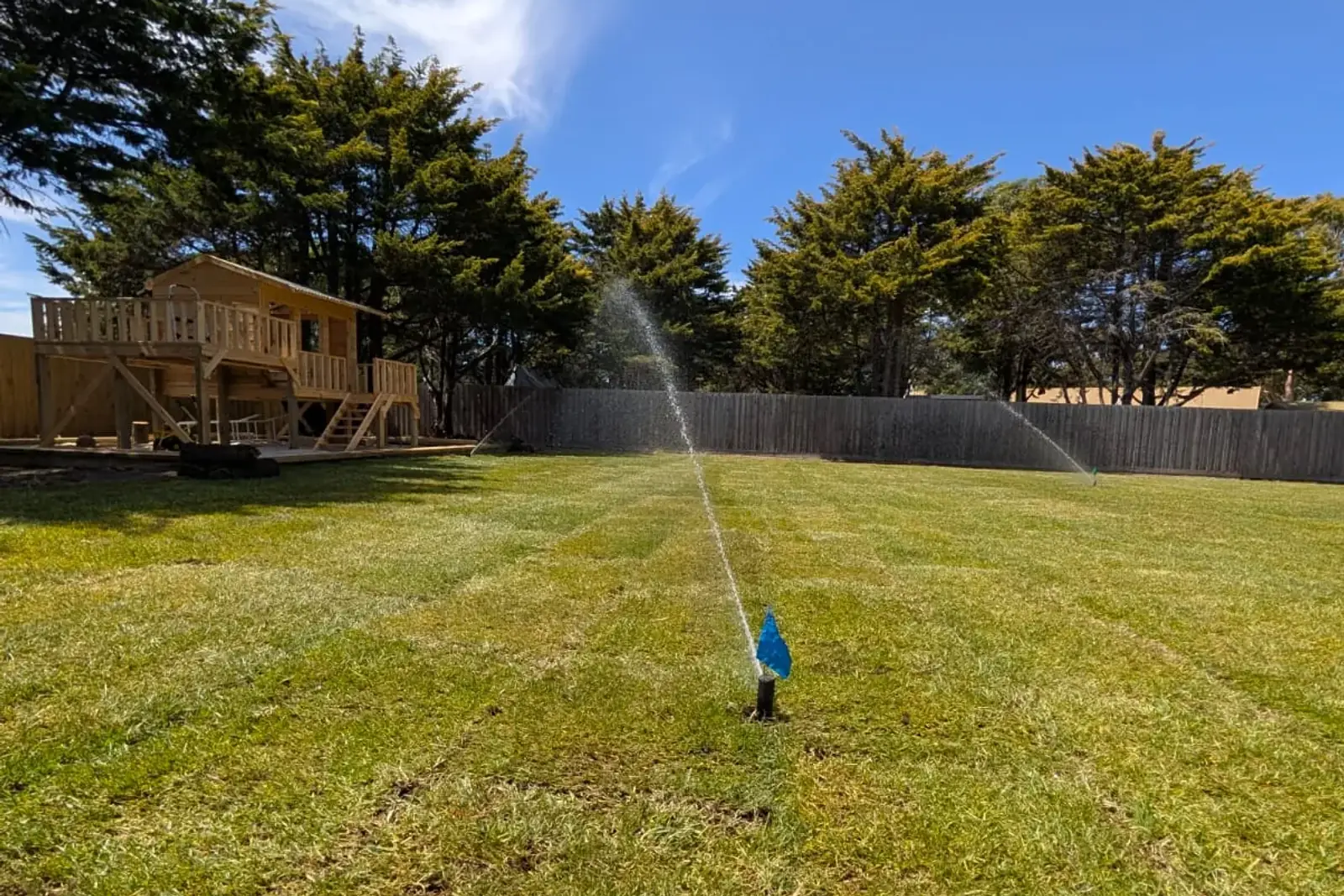
The day we pack up is not the day the garden is finished. Turf takes four to six weeks to root in, plants take a season to settle, mulch sinks, and the irrigation settings we leave you with are a starting point until the weather has had its say.
The first few weeks are about watching the garden and reacting early, not about constant fiddling. Follow the care notes we leave for your specific turf and plants, and call us as soon as something looks wrong rather than waiting to see if it sorts itself out.
Keep off it at first
Stay off new turf and freshly mulched beds for the first few weeks. Do not drag bins, wheelbarrows or furniture across a new lawn, and keep the dog off it if you can.
If other trades are still coming through, show them which areas are finished. A single daily route across new turf becomes a worn, compacted strip within a fortnight. If a path has to be crossed, lay a plank over it.
Water the turf properly
New natural turf needs daily watering for about the first three weeks. Keep the turf and the soil beneath it moist, not flooded. The surface can look fine while the soil underneath is dry, so lift a corner now and then: if the soil is dry, water for longer.
Check the edges, corners and the strips beside walls, fences and paths. They dry out faster than the middle, and they are the first places a new lawn browns off. A timer running is not proof the whole lawn is being watered; look for gaps in the coverage.
From the third or fourth week, water less often but for longer, so the roots follow the moisture down. Under Victoria's permanent water saving rules, watering systems can run between 6pm and 10am. Most Melbourne water corporations allow extra daytime watering for newly laid lawn if you ask, and the exemption usually covers buffalo, couch and kikuyu. Our guide to the best time to lay turf in Melbourne explains the rules.
The first mow
Mow only once the turf passes the tug test: lift a corner gently, and if it holds, the roots have taken. That is often ten to fourteen days in warm weather and several weeks in the cold. Use a sharp blade on a high setting, and never take more than a third of the leaf off in one cut. Mowing early, or low, drags rolls out of place and scalps the joins.
After that, settle into a normal routine. Our lawn mowing page covers heights and frequency for the common Melbourne varieties. If the lawn is struggling despite the care, why new turf fails walks through the usual causes.
Help the plants settle in
Water new plants at the roots, not over the leaves, and check the soil under the mulch rather than the mulch surface. Beds in full sun and beds against a north or west wall dry out well before the shaded ones.
Some wilting on a hot afternoon in the first week is normal. Wilting that is there in the morning, yellowing leaves, a plant that rocks in the ground or an emitter that has moved off the root zone is not, and it is worth a call. Hold off on fertiliser and extra products unless they are part of the planting plan; new plants rarely need more than water.
Keep the mulch where it belongs
Wind, birds and watering move fresh mulch about. Rake it back into place as needed, and keep it clear of plant stems, tree trunks, drainage grates and the house. Pull young weeds while they are small; a new bed still catches wind-blown seed, and mulch slows weeds down without stopping them.
Organic mulch settles and breaks down. Expect to top it up to 50 to 75 mm once a year.
Run the irrigation and watch it
Run each zone and stand there while it runs. You are looking for blocked or broken heads, emitters pointing at paving, leaks, and dry patches between the sprinkler arcs. Do it again after the first heavy rain and the first hot week, because settling ground and growing plants change the coverage.
Change the schedule with the seasons. A controller still on its summer setting in May wastes water and keeps clay soil soggy. If you would rather not think about it, a controller with a rain or soil-moisture sensor skips the cycles the garden does not need. If something has stopped working, book an irrigation repair before the lawn or plants start to show it.
Clean paving the right way
Sweep soil and leaf litter off new paving before it stains or washes into the drains. Check with us or the supplier before pressure-washing or using chemical cleaners; some pavers, sealers and jointing sands do not take it, and a strong setting can blast the sand out of fresh joints.
Look again after bad weather
After heavy rain, walk the garden and look for water sitting where it should drain, soil washing out of beds, mulch piled up at the outlets and erosion along new edges. After a hot, windy spell, check the exposed turf and the plants on the windward side for drying out.
Doing this in the first month tells you the difference between a one-off reaction to the weather and a level or drainage problem that needs fixing.
A simple routine
Weekly, while everything establishes
- check moisture and irrigation coverage;
- pull obvious weeds and pick up litter;
- look at the turf edges and the new plants;
- keep drains and paths clear; and
- report anything moving, leaking or sitting in water.
Monthly, once it has settled
- mow and edge;
- prune only what needs it;
- run the irrigation and watch it;
- rake or top up displaced mulch; and
- check paving joints, edges and garden borders.
Each season
- adjust the watering;
- review growth and pruning;
- check the lawn's condition and mowing height;
- clear built-up debris; and
- plan any repairs or improvements before they become urgent.
Keep the handover notes
Hang on to the plant names, product details, care notes, irrigation layout and a few photographs from handover. They make it much easier for whoever maintains the garden later to match materials and understand what was installed.
If you would rather hand the routine to someone else, Bastiano Landscaping offers garden care and property maintenance, including mowing and planting care. Talk to Sebastian about a plan for the property before small things become expensive ones.
Related reading
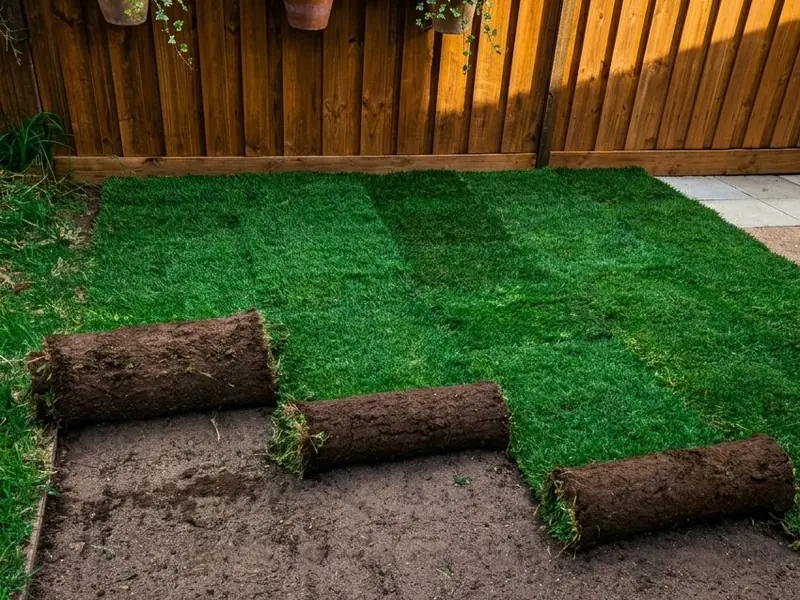
What Is the Best Time of Year to Lay Turf in Melbourne?
For most Melbourne homes the best windows are spring, from roughly September to November, and early autumn, in March and April. The soil is warm enough for roots to grow, the worst heat is out of the way and rain does some of the watering for you. Turf roots grow best when the soil sits between about 14 and 25 degrees, which is why those two windows keep coming up.
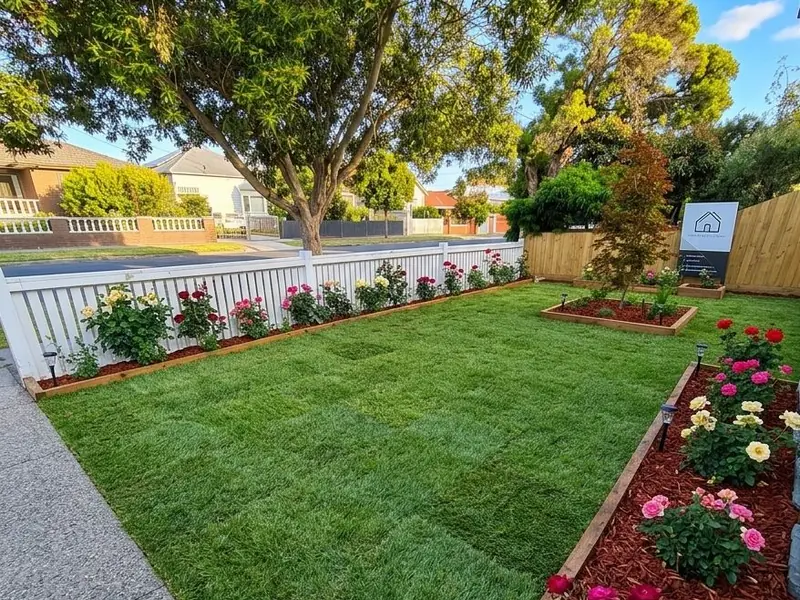
Why New Turf Fails: Soil, Drainage, Installation and Aftercare
New turf creates an immediate transformation, but the green surface is only the visible layer. Whether it becomes a lasting lawn depends on what happened before the first roll went down and on the first four to six weeks afterwards, while the roots establish.
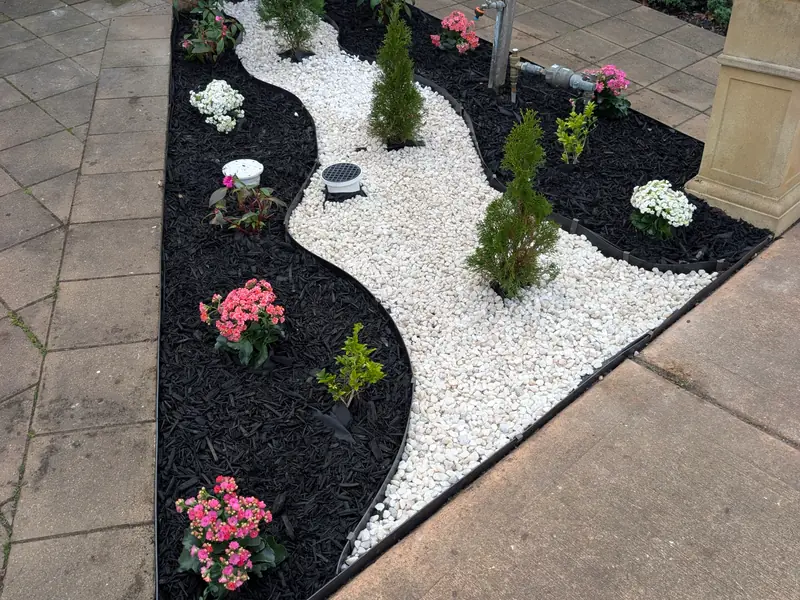
Low-Maintenance Landscaping Ideas for Melbourne Homes
Low maintenance does not mean covering the entire yard in one hard surface. It means designing the garden so routine work is predictable, easy to reach and in proportion to the time you actually want to spend outside.