
Pavers vs Stepping Stones: Which Is Better for Your Garden Path?
Pavers and stepping stones both give you a clear route through a garden, but they solve different problems. Continuous paving is the better choice where the path is used every day, in all weather, by people carrying things. Spaced stepping stones are the better choice where traffic is lighter and you want the path to sit gently in lawn, gravel or planting rather than cut a hard line through it.
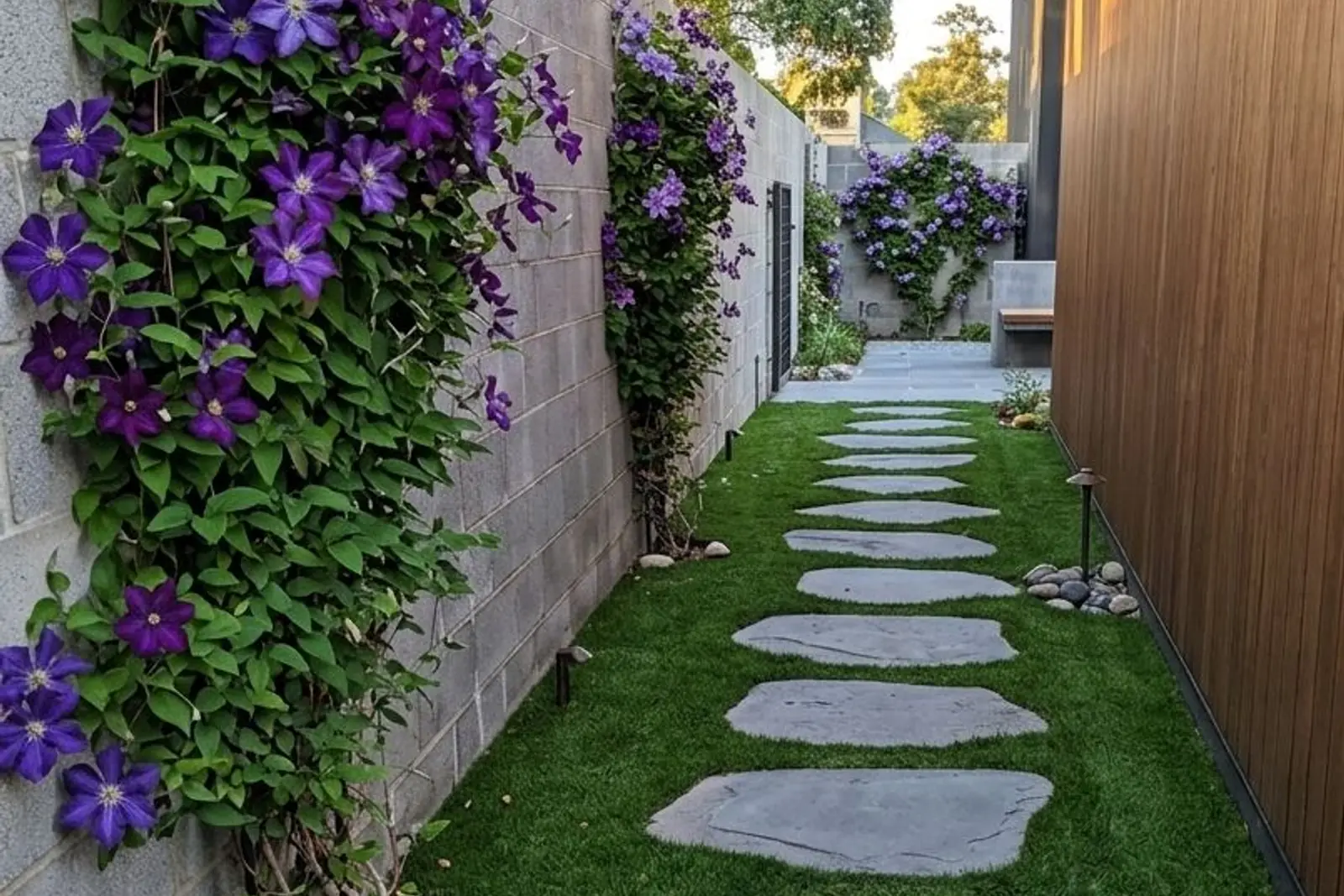
Pavers and stepping stones both give you a clear route through a garden, but they solve different problems. Continuous paving is the better choice where the path is used every day, in all weather, by people carrying things. Spaced stepping stones are the better choice where traffic is lighter and you want the path to sit gently in lawn, gravel or planting rather than cut a hard line through it.
Start with movement, not looks: who will use the path, how often, what they will carry and what happens when it rains.
Pavers vs stepping stones at a glance
| Continuous paving | Stepping stones | |
|---|---|---|
| Best for | Main entries, routes to bins, clotheslines and side gates, commercial access | Garden walks, narrow side yards, routes used a few times a day |
| Surface underfoot | Even and continuous; suits prams, wheelbarrows and mobility aids | Individual pads with lawn, gravel or pebbles between; needs a steady stride |
| Wet weather | Stays clean and dry if the falls are right | Gaps can get muddy in lawn; fine in gravel or pebbles |
| Base preparation | Excavation, compacted road base and bedding sand across the whole area | A firm, level bed under each stone; far less material |
| Drainage | Needs deliberate falls and somewhere for runoff to go | Water soaks into the ground between stones, but the surrounding levels still matter |
| Maintenance | Sweep, keep joints filled, watch edges | Edge and mow around stones in lawn; top up and weed gravel or pebbles |
| Look | Strong architectural line, formal, ties in with patios and walls | Softer and more relaxed; irregular stone feels organic, rectangles feel contemporary |
| Cost drivers | Area, base depth, cutting, edge restraint, material | Number and size of stones, setting each one level, the surround material |
When continuous paving makes sense
A fully paved path gives a consistent surface. It suits main entries, routes to bins and clotheslines, commercial access and anywhere wheelbarrows, prams or mobility aids travel. It also controls mud and wear where traffic is concentrated.
The base, the falls and the edge restraint still decide whether it lasts. Pavers laid over an inadequate base settle, rock and create trip points. Around Melbourne that matters more than in many places: large parts of the west and north sit on reactive basaltic clay that swells in wet winters and shrinks in dry summers, and paving on that ground needs a properly compacted base and good drainage or it will move with the clay underneath.
When stepping stones work well
Stepping stones suit lower-traffic garden routes and places where a continuous hard strip would feel heavy. They sit happily in turf, gravel, groundcover or mulch and help break up a narrow side yard.
Spacing has to feel natural. Stones that are too small, too far apart or set at different heights are uncomfortable and can be a trip hazard. For a route used every day, set the stones to a normal walking stride, flush with the surface around them, rather than arranging them for the photograph.
Accessibility and everyday use
Ask how the route will work on an ordinary Tuesday, not just after the garden has been tidied. Consider children running through, older family members, bins, bikes and deliveries, wet shoes and muddy edges, lighting at night, and whether anyone needs a smooth, continuous surface. If accessibility is a priority, continuous paving is the practical starting point, and specific requirements should be settled at the design stage.
Drainage and the surrounding surface
Stepping stones leave more open ground between hard elements, but that does not solve drainage by itself. The surrounding soil, gravel or lawn still needs suitable levels and somewhere for water to move.
Paved paths need deliberate falls and a clear idea of where runoff ends up. A path should never direct water toward the house or create a low edge where it pools.
What drives the installation cost
We do not publish per-metre prices because two paths of the same length can cost very different amounts. These are the factors that move the figure, in roughly the order they matter:
- Base preparation. Continuous paving needs excavation, a compacted road base and screeded bedding sand across the whole area. Stepping stones need a firm, level bed under each stone only, which is the main reason a stepping-stone path usually involves less material and less excavation for the same route.
- Ground conditions. Soft, wet or reactive clay ground needs a deeper base and more attention to drainage. Old concrete or rubble in the way has to be broken out and carted off.
- Access. A path at the front of a house with room for a machine costs less to build than the same path down a side yard where everything comes in by wheelbarrow through a gate.
- Removal and disposal. Existing concrete, pavers, soil and green waste all have to leave the site, and tip fees are part of the job.
- Material. Concrete pavers, clay pavers, bluestone and porcelain sit at different price points, and heavier large-format stone takes longer to handle and set.
- Cutting and shape. Curves, angles, steps and fitting around existing features add cutting and labour. A straight run of full pavers is the cheapest layout to lay.
- Edge restraint and drainage. Restraints that lock the field in place, and any drain or pit the falls require, are small line items that prevent expensive repairs.
- The surround. For stepping stones, the lawn, gravel, pebbles or planting between the stones is its own cost, as is any lighting set along the path.
Ask for the quote to be broken into preparation and surface. If one quote is much cheaper than another, the difference is usually in the base, not the pavers.
Maintenance differences
Paving is easy to sweep and move equipment across, although joints and edges still need attention. Stepping stones in lawn need neat mowing and edging; stones in gravel or mulch need the surround topped up and weeded now and then. Planting between or beside stones softens the result, but choose plants that tolerate foot traffic and suit the light and water on that side of the house.
How each option changes the look
Continuous paving creates a stronger architectural line. It makes an entry feel formal and connects visually with patios, retaining walls and the materials of the house.
Stepping stones create rhythm and make the walk through a garden more relaxed. Irregular stone feels organic; rectangular units feel contemporary. Repeating the colour or material elsewhere in the garden helps the path belong.
Can you combine them?
Yes, and it is often the best answer. A stable paved area at doors and busy zones, with stepping stones continuing into the garden, gives the everyday route a proper surface without paving the whole yard. The change should feel deliberate, with safe transitions and consistent levels.
On a recent front-yard job with instant turf, a feature planter and garden lighting, a stepping-stone path was set through white pebbles to the front door with warm low-voltage lights along the borders, so the path reads as part of the garden by day and is easy to follow at night.
Choose based on function first
Use pavers when the route needs dependable, frequent access. Use stepping stones when traffic is lighter and you want the path to sit gently in the landscape. Then refine the material, colour, shape and surrounding planting.
Bastiano Landscaping can plan the path as part of a wider garden design, build a focused paving project or a stepping-stone path. Send photographs of the route and the access to it so Sebastian can suggest a practical starting point.
Related reading
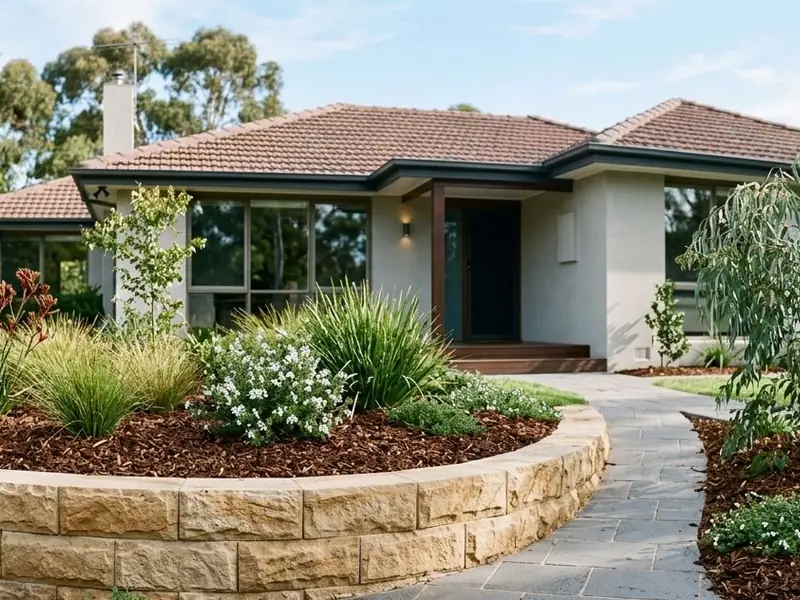
Does Your Melbourne Yard Need a Retaining Wall?
A retaining wall is used to hold back soil where ground levels change. It can create a usable lawn, protect a path, support a garden bed or help organise a sloping site. It should not be added purely as decoration without understanding what it needs to retain and where water will go.
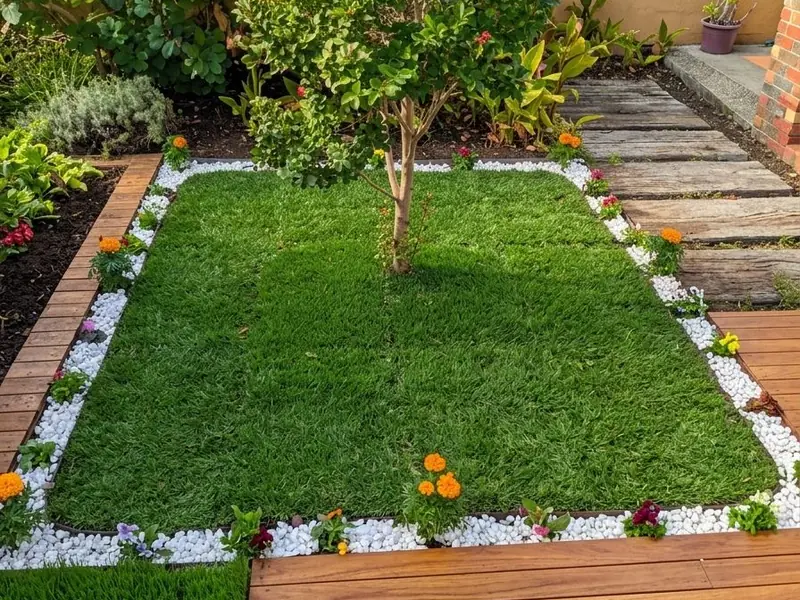
Small Backyard Landscaping Ideas That Make Better Use of Space
A small backyard does not need miniature versions of every feature found in a large garden. It works better when a few functions are chosen deliberately and the space between them is kept clear.
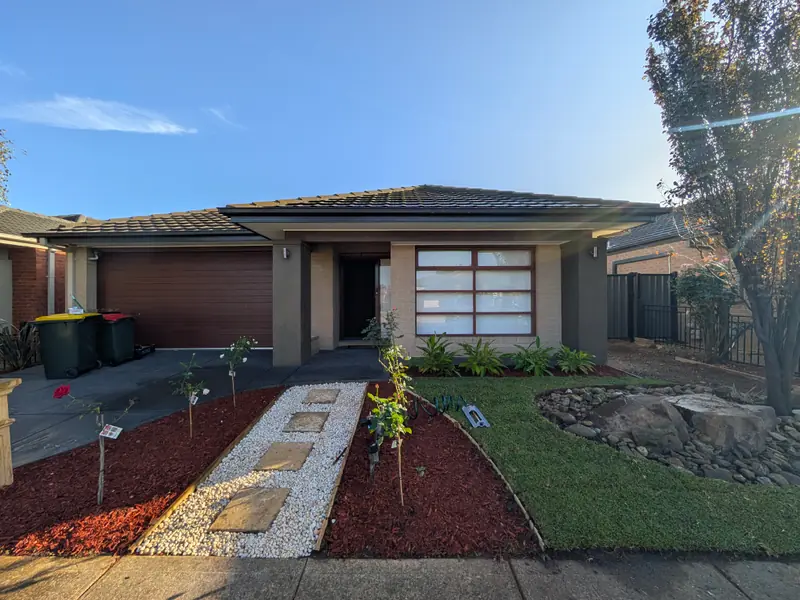
How to Plan a Complete Landscaping Project Without Wasting Your Budget
Planning a landscaping project comes down to five decisions made in the right order: work out how the space has to function, deal with water and levels before anything is built on top of them, choose a small palette of materials, put the money into the parts that cannot be redone, and sequence the work from the ground up so nothing finished gets wrecked by the next stage. Do that, and even a project built over two or three years will end up as one garden rather than a set of patches.