
Turf Repair or Full Lawn Replacement: How to Decide
A few bare patches do not always justify replacing an entire lawn. Equally, repeatedly patching a lawn with poor drainage, unsuitable soil or widespread weed problems can spend money without changing the result.
A few bare patches do not always justify replacing an entire lawn. Equally, repeatedly patching a lawn with poor drainage, unsuitable soil or widespread weed problems can spend money without changing the result.
The right approach depends on the cause, how much of the lawn is affected and whether the remaining surface is worth keeping.
Repair may be suitable when the problem is isolated
Patching can make sense when:
- damage is confined to a small area;
- the surrounding lawn is healthy and consistent;
- the cause is understood and can be corrected;
- the same or a compatible turf can be sourced; and
- levels and drainage across the rest of the lawn are sound.
Examples include a worn entry point, a small pet-damaged area, localised construction damage or a section affected by temporary shade.
The repair should include the ground beneath the patch. Placing turf over compacted or contaminated material may reproduce the same bare spot.
Replacement may be better when problems are widespread
Full replacement becomes more reasonable when:
- weeds or unwanted grass dominate the area;
- there are many disconnected bare or sunken sections;
- the surface is uneven across the yard;
- water sits in multiple locations;
- the existing turf is unsuitable for the available light or use;
- major landscaping or drainage work is already planned; or
- previous repairs have repeatedly failed.
Replacement creates an opportunity to correct levels and preparation consistently instead of treating symptoms one patch at a time.
Diagnose the cause before choosing
Look beyond the visible damage. Common causes include:
- concentrated foot or pet traffic;
- insufficient or excessive water;
- irrigation coverage gaps;
- shade and competition from trees;
- compacted soil;
- poor drainage or incorrect falls;
- unsuitable mowing; and
- pests, disease or weed pressure.
If the cause remains, a repaired or replaced lawn can deteriorate again.
Matching a patch can be difficult
Even when the turf variety is matched, a new patch may differ in colour while it establishes. Mowing height, nutrition, age and light exposure influence appearance.
An exact visual blend may take time. If the existing lawn contains mixed grasses, a new patch can remain obvious. This is an aesthetic consideration rather than an automatic reason to replace everything, but expectations should be realistic.
Use wider landscaping work as a decision point
If paths, retaining, drainage, irrigation or garden beds are about to change, repair may be premature. Heavy construction can affect access and levels, so turf is normally completed after disruptive work.
Planning the whole project may also reveal that part of the problem lawn would be more useful as a path, planted bed or entertaining area.
What about synthetic turf repairs?
Synthetic turf can also suffer local damage, movement, seam issues or worn infill. Whether repair is practical depends on the original product, availability of a match, base condition and the extent of damage.
A visibly different replacement section may be difficult to disguise in an older installation. The base and drainage should be inspected rather than replacing the surface alone.
A practical rule
Repair when the surrounding lawn is healthy and the problem is genuinely local. Consider replacement when the cause affects the whole area or the existing surface no longer suits the way the yard is used.
Sebastian can assess turf repair and patching against a new natural turf or synthetic turf installation. Send wide photos as well as close-ups, because the surrounding levels and condition are important to the decision.
Related reading
Natural vs Synthetic Turf in Melbourne: Which Is Right for Your Property?
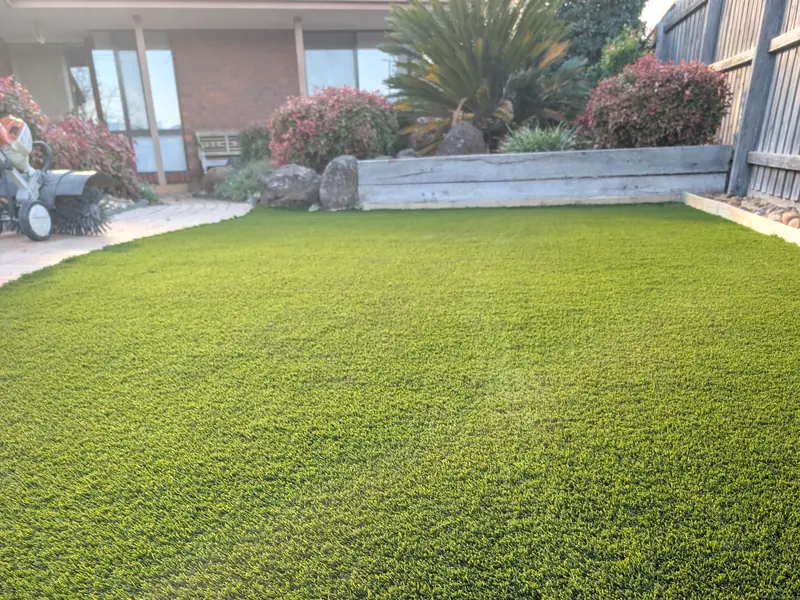
The best lawn is not simply the greenest option in a photograph. It is the one that suits how you use the space, how much maintenance you want to take on, the amount of sun the yard receives and how the site drains.
What Is the Best Time of Year to Lay Turf in Melbourne?
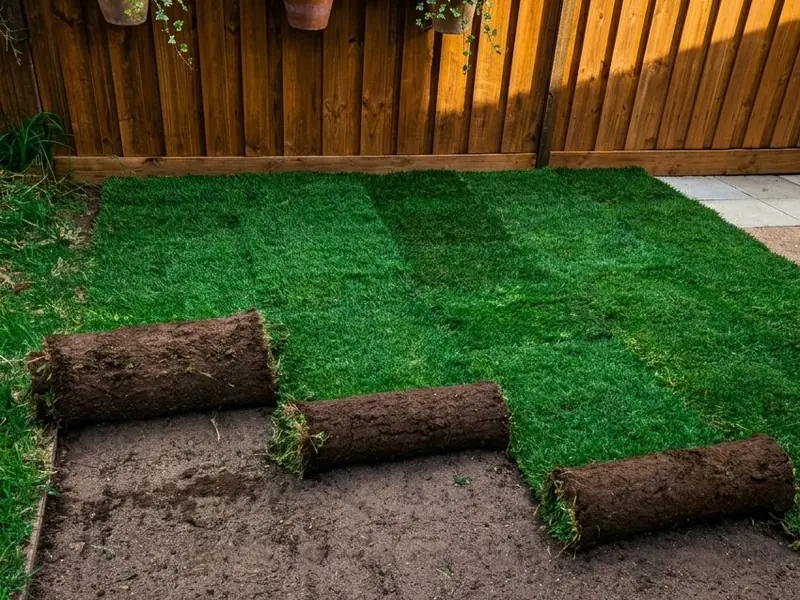
For most Melbourne homes the best windows are spring, from roughly September to November, and early autumn, in March and April. The soil is warm enough for roots to grow, the worst heat is out of the way and rain does some of the watering for you. Turf roots grow best when the soil sits between about 14 and 25 degrees, which is why those two windows keep coming up.
Why New Turf Fails: Soil, Drainage, Installation and Aftercare
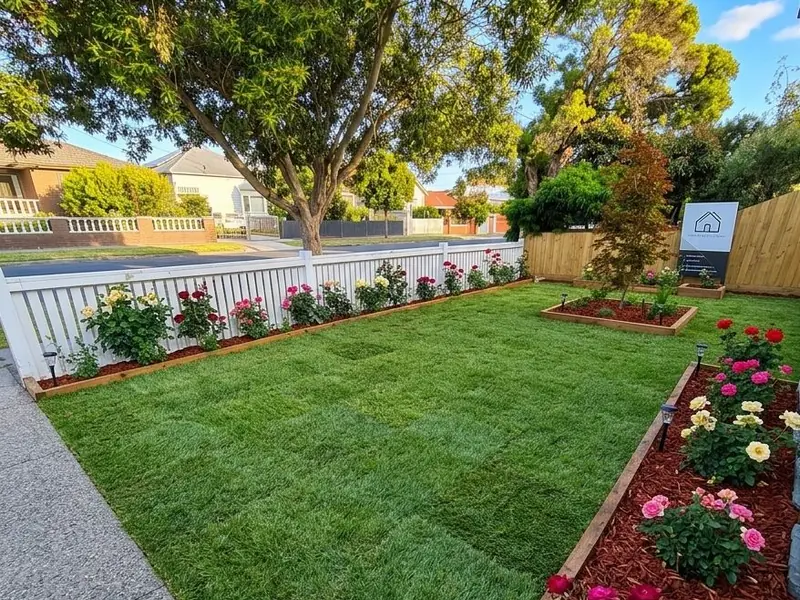
New turf creates an immediate transformation, but the green surface is only the visible layer. Whether it becomes a lasting lawn depends on what happened before the first roll went down and on the first four to six weeks afterwards, while the roots establish.